
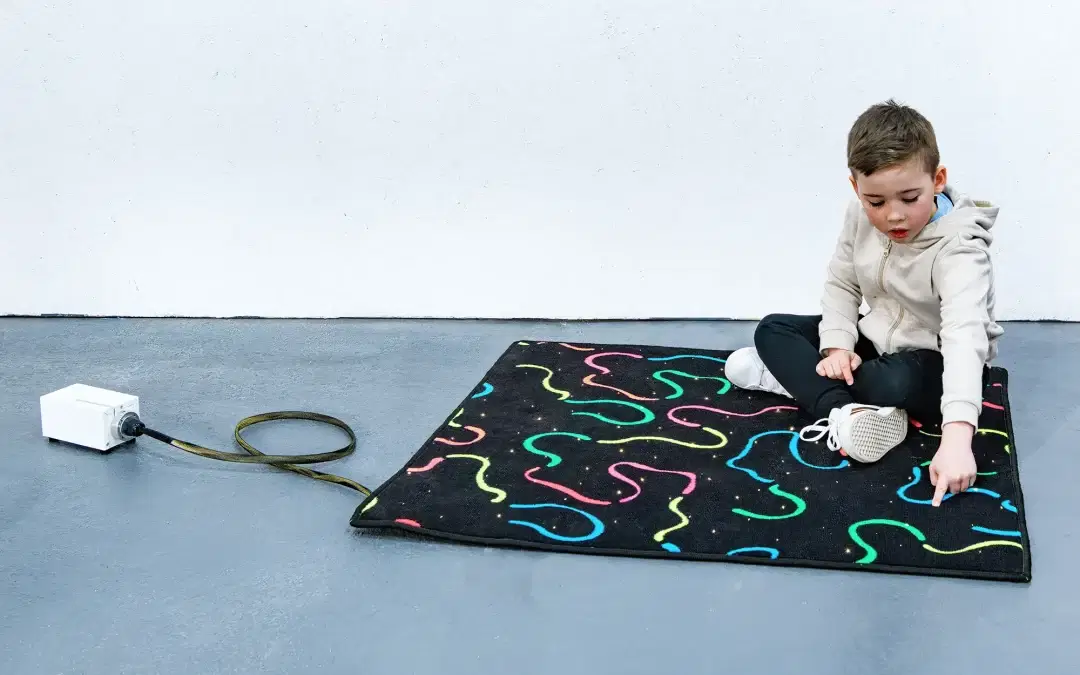
In today’s fast-paced world, creating enriching environments for children and individuals with sensory needs has never been more important. One simple yet powerful tool that is gaining popularity in homes, classrooms, and therapy settings is the sensory carpet.
But what exactly is a sensory carpet, and why is it such a valuable addition to your space?
What Is a Sensory Carpet?
A sensory carpet is more than just a soft surface to walk on, it’s a tactile playground. These carpets are designed with different textures, colours, shapes, and even sounds to stimulate the senses. Some feature raised patterns, embedded materials like rubber or faux grass, or sections with varying levels of firmness. Others may incorporate visual stimuli, such as bold colours or interactive elements.
They’re commonly used in:
- Sensory rooms
- Early childhood education centres such as nurseries
- Homes with young children
- Therapy settings for children with autism, ADHD, or sensory processing disorders
The Benefits of Sensory Carpets
- Tactile Stimulation
Sensory carpets help children explore different textures safely which can further develop their understanding of the world around them.
- Motor Skill Development
Walking, crawling, or rolling across different surfaces improves both gross and fine motor skills. Some sensory carpets encourage balance and coordination, which are essential for physical development.
- Calming and Regulation
For children with sensory processing challenges, sensory carpets can offer a grounding experience. The variety of textures and colours can be calming and help regulate overstimulation.
- Cognitive and Language Development
As children interact with textures, patterns, and colours, caregivers can engage them in descriptive conversation. Phrases like “Can you find the bumpy part?” or “How does that feel?” boost vocabulary and sensory awareness.
- Creative Play
Sensory carpets often become imaginative landscapes — a forest floor, a racetrack, or a magic path. This open-ended play is essential for creativity and problem-solving.
Choosing the Right Sensory Carpet
When selecting a sensory carpet, consider the following:
- Age-appropriateness: Soft, safe textures for toddlers vs. more complex patterns for older children.
- Safety and hygiene: Non-toxic materials, easy to clean, and securely affixed to the floor.
- Therapeutic goals: Are you aiming for stimulation, calming, or motor development?
You can purchase ready-made sensory carpets, or even create your own using textured fabric squares, artificial grass, foam tiles, bubble wrap, or felt.
Sensory carpets are more than just functional, they help children to better understand, communicate, and develop. Whether you’re supporting a child with sensory challenges or simply want to enrich playtime, a sensory carpet is a creative and effective tool worth exploring.
Sometimes the best adventures start right under your feet.