
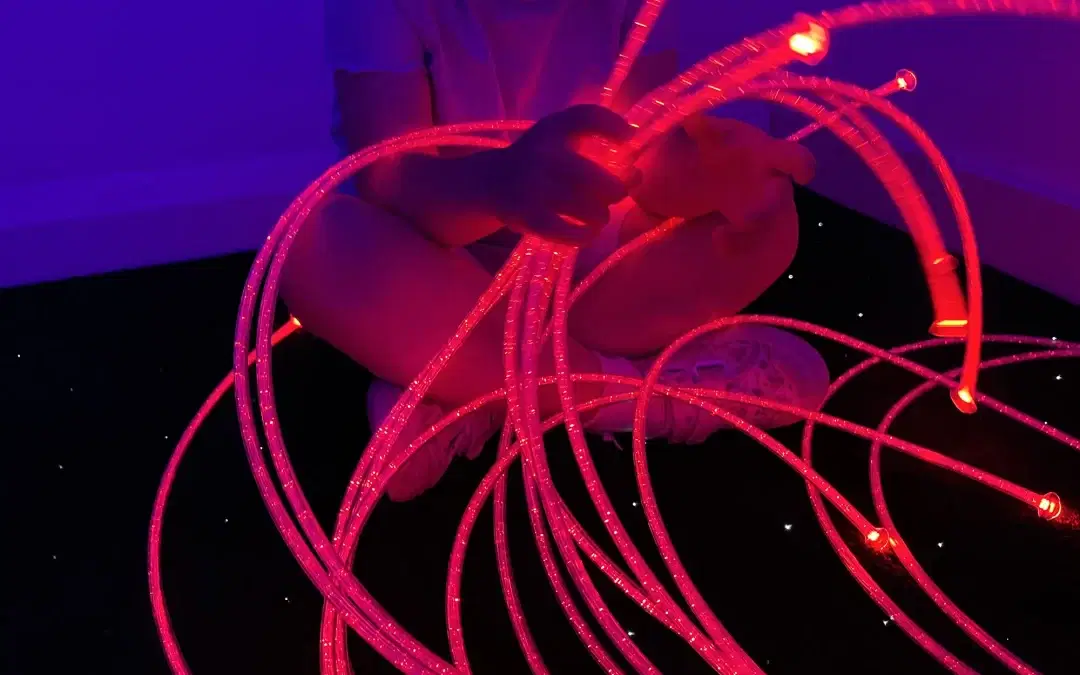
In the world of sensory development, light can be more than just illumination — it can be an experience. From calming glows to mesmerising twinkles, sensory light sources and fibre optic strands play a transformative role in creating safe, stimulating environments for children and individuals with sensory needs.
Whether you’re setting up a sensory room, enhancing a classroom, or building a calming corner at home, incorporating light-based sensory tools can make a world of difference.
What Are Sensory Light Sources?
Sensory light sources are tools designed to stimulate the visual sense while supporting emotional regulation, attention, and relaxation. These can include:
- Bubble tubes
- LED projectors
- Interactive light panels
- Glow-in-the-dark carpets and toys
- Fibre optic lights
They come in a range of intensities and colours and are often used in sensory integration therapy, especially for individuals with autism, ADHD, or sensory processing difficulties.
The Power of Fibre Optic Strands
Among the most popular and effective sensory lighting tools are fibre optic strands. These flexible, glowing threads of light can be draped, touched, or even laid across the body for physical and visual stimulation.
Fibre optics work by transmitting light through ultra-thin plastic fibres, creating safe, cool-to-the-touch strands that gently glow or change colours. They’re often used in dark sensory rooms where the changing lights captivate attention and create a calming atmosphere.
Benefits of Sensory Lights and Fibre Optics
- Visual Stimulation and Engagement
The ever-changing colours and patterns of sensory lights draw the eye, supporting visual tracking and attention in individuals who may struggle to stay focused.
- Calming and Relaxation
Soft, rhythmic lights (especially in blues, purples, and greens) can reduce anxiety, helping children wind down after a busy day or regulate during meltdowns.
- Safe Sensory Exploration
Fibre optic lights are cool to the touch and often used in dark rooms, offering a safe, hands-on experience for tactile exploration. Many children enjoy the sensation of playing fingers with the glowing strands.
- Encouraging Cause and Effect Learning
Interactive light panels or lights that respond to touch or sound can support the development of cognitive skills, especially cause and effect thinking, which is essential for communication and learning.
- Mood Enhancement
For children with sensory sensitivities, harsh fluorescent lighting can be overwhelming. Replacing these with sensory lights creates a more soothing environment that promotes a sense of safety and emotional balance.
How to Use Sensory Lights in Different Settings
In a Sensory Room:
- Place fibre optic strands in a quiet corner for a relaxing visual escape.
- Use a bubble tube or projector light as a calming focal point.
- Integrate low lighting with adjustable brightness to suit individual needs.
In the Classroom:
- Add a light panel or glow board to your calming area.
- Use portable fibre optic lights as a reward or sensory break tool.
At Home:
- Create a bedtime routine that includes a fibre optic night light to reduce bedtime anxiety.
- Turn bath time into a sensory adventure with waterproof glow toys
Choosing the Right Sensory Light Products
When selecting light sources for sensory use, keep in mind:
- Durability – Choose high-quality materials that are safe and long-lasting.
- Safety – Ensure items are cool to the touch and suitable for your child’s age and needs.
- Customisability – Look for options with adjustable colours, brightness, or modes.
- Ease of cleaning – For hygiene, especially in shared or therapeutic spaces.
Sensory light sources and fibre optic strands aren’t just visually stunning, they’re therapeutic tools that offer comfort, engagement, and joy. Whether used to calm, stimulate, or simply bring wonder to a room, light has the unique power to transform a space and touch lives.
By incorporating these elements into your environment, you’re not just adding decoration, you’re creating an experience where the senses can safely explore, learn, and grow.
Sometimes, all it takes is a little light to make the world feel a bit brighter.