
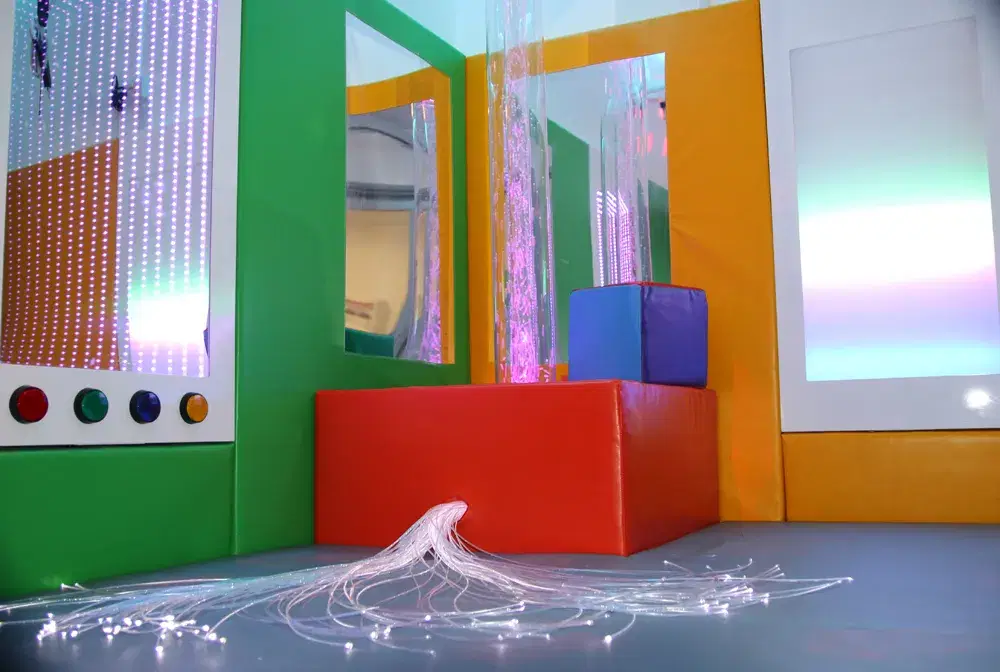
Sensory equipment are objects designed to engage one or more of the five senses (sight, sound, touch, smell, and taste) to help individuals regulate their sensory input, improve focus, and promote emotional well-being. These tools are fundamental in supporting individuals with sensory processing differences, neurodiversity, disabilities, or those seeking regulation and cognitive focus.
Why Sensory Equipment Matters
Sensory processing refers to how the brain receives, organises, and responds to sensory stimuli. When someone experiences sensory processing differences (commonly seen in individuals with autism or ADHD) they might be hypersensitive (over-reactive) to stimuli like touch or sound, or hyposensitive (under-reactive) to the same input. Sensory equipment helps provide appropriate feedback and support self-regulation, focus, and emotional stability which is often used in occupational therapy.
Types of Sensory Equipment
Manufacturers typically design and supply sensory equipment across a range of categories to address various sensory needs:
- Vestibular & Proprioceptive Equipment – includes swings, therapy balls, balance boards, scooter boards, and mini trampolines. These tools offer movement-based input to support coordination, balance, body awareness, and muscle tone.
- Deep Pressure Equipment – includes weighted blankets, body socks, and hug machines. These items deliver deep-touch pressure, which can have a calming effect, helping to ease overstimulation, lower anxiety, and enhance focus.
- Tactile Equipment – items like fidget toys, sensory bins, textured panels, vibrating cushions, and handheld massagers promote sensory engagement through touch. These tools aid in developing fine motor skills and support self-regulation.
- Visual Equipment – includes bubble tubes, fibre optic lights, projectors, air tubes and water walls. These visual tools can either soothe or gently stimulate visual processing and tracking, particularly for individuals with visual sensitivities.
- Auditory Equipment – includes sound panels, noise-cancelling headphones, and nature sound machines help shape the auditory environment. These tools can calm or activate the auditory system, depending on individual needs.
- Multisensory Environments (Sensory Rooms) – These purpose-designed spaces integrate lighting, sound, tactile surfaces, motion, and sometimes scent to create immersive experiences. They are tailored to individual sensory profiles and are commonly found in clinics, schools, hospitals, and other inclusive public settings.
Please get in touch and let us know if you need any support with helping you pick the right product.